Building Strong Foundations at Every Stage
━━━━━━━━━━━━━━━━━━━━━━━━━━━━━━━━━━━━━━━━━━━━━━━━
A strong education is built over time.
The skills students need as they progress through elementary school do not suddenly appear when academic expectations become more advanced. Independence, concentration, responsibility, confidence, and strong learning habits begin developing much earlier.
At Century Private School, each stage of a student’s education is designed to prepare them for the next. Students begin with Century’s Montessori Preschool and Kindergarten programs and then transition into the Elementary Program for Grades 1 to 8, where learning follows an enriched Ontario Ministry of Education curriculum.
The goal is not simply to move students from one grade to the next. It is to build a strong academic foundation that becomes deeper, more disciplined, and more independent as students grow.
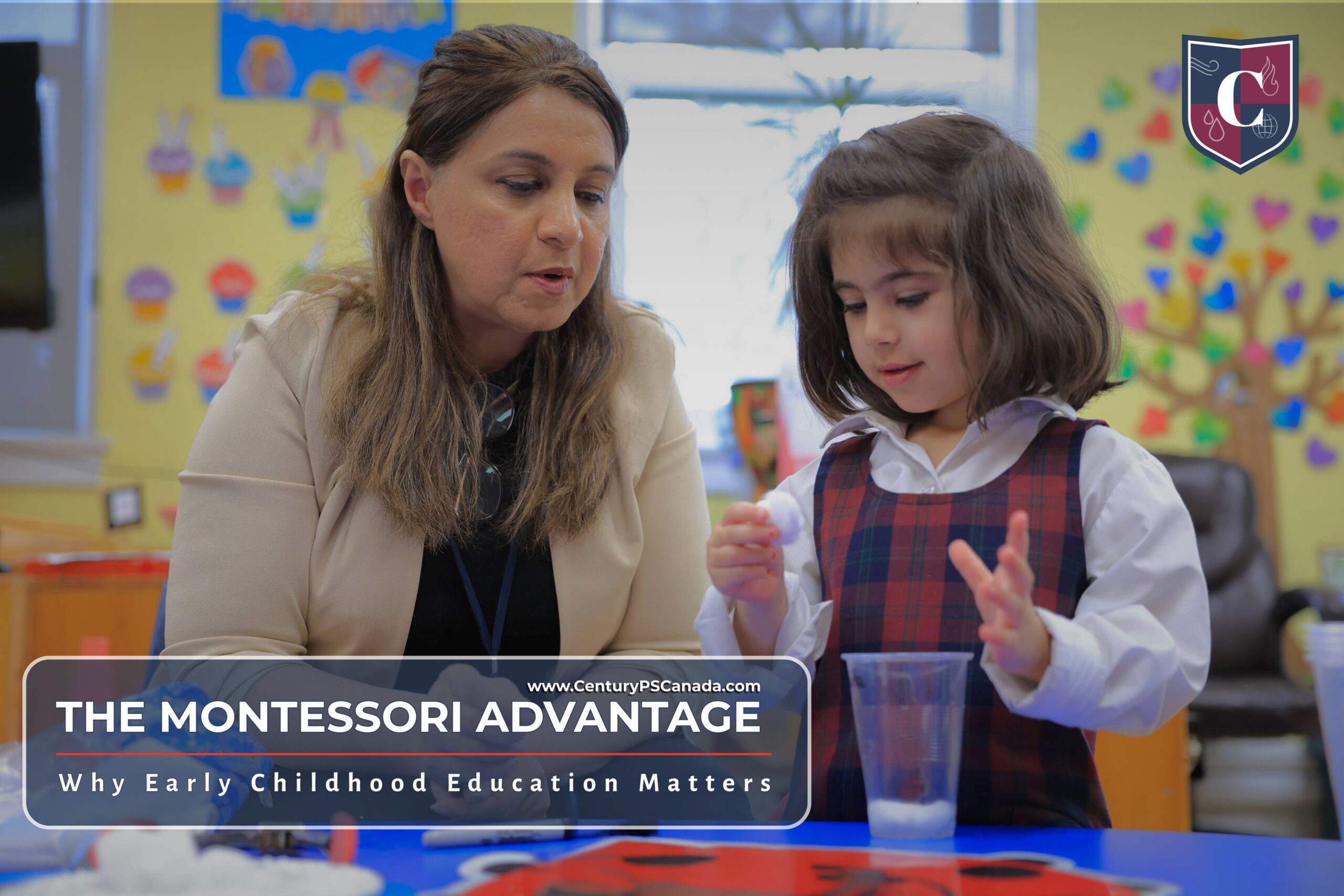
It Begins in Montessori
The Montessori years introduce children to much more than early academic concepts.
Students begin learning how to focus, follow routines, complete tasks carefully, make choices, and take responsibility for their learning environment. These early habits create an important foundation for future academic success.
Through carefully structured activities and hands on learning, children are encouraged to explore while also developing concentration, coordination, independence, and confidence.
At this stage, independence does not mean students are expected to manage everything on their own. Teachers provide clear guidance and create an environment where children gradually learn to complete tasks with increasing confidence.
These early experiences help students understand something that will remain important throughout their education: learning requires both curiosity and discipline.
Transitioning Into the Elementary Program
After the Montessori years, students move into Century’s Elementary Program for Grades 1 to 8.
The academic program becomes increasingly structured and challenging while continuing to build on the independence, concentration, and confidence developed in the early years.
Foundational skills in reading, writing, mathematics, science, and other core subjects are strengthened as students begin working with more complex concepts and greater academic expectations.
Century places a strong emphasis on understanding, accuracy, and consistent academic progress. Students are encouraged to go beyond simply completing an assignment. They learn to explain their thinking, review their work carefully, apply what they have learned, and take increasing responsibility for the quality of their work.
Teachers continue to provide guidance while gradually increasing expectations. Students receive the support they need to succeed while also learning that effort, responsibility, and attention to detail matter.
Building Towards Secondary School
As students progress through Grades 7 and 8, academic responsibilities become more complex.
Assignments require greater organization. Subjects become more advanced. Students are expected to retain information, connect concepts across different areas of learning, manage deadlines, and take greater ownership of their academic performance.
These expectations are easier to meet when strong habits have already been developed.
A student who has learned to work carefully, stay organized, ask thoughtful questions, and respond constructively to feedback is better prepared for the increasing demands of Grades 7 and 8 and for the transition into secondary school.
This is why Century’s approach focuses on developing these skills progressively rather than waiting until students are older to expect them.
High Expectations Grow With the Student
Academic expectations should evolve as students mature.
What responsibility looks like for a four year old is very different from what it looks like for a Grade 7 or Grade 8 student. However, the underlying principle remains the same.
Students grow when expectations are clear, consistent, and appropriate for their stage of development.
At Century, students are encouraged to challenge themselves while knowing that their teachers are there to provide instruction, feedback, and support.
As their abilities develop, so does the level of responsibility they are expected to take.
Over time, students learn that confidence is not built by avoiding difficult work. It develops by learning how to approach challenges successfully.
Creating Continuity in a Child’s Education
One of the advantages of an educational journey that extends from Montessori through Grade 8 is continuity.
Students are able to build on the academic habits and expectations introduced in earlier stages rather than beginning again with an entirely different approach to learning.
The child who begins by learning how to independently complete a Montessori activity can gradually become the elementary student who organizes a larger assignment, prepares for an assessment, manages several subjects, and takes responsibility for the quality of their work.
The expectations change, but the foundation remains.
Developing More Than Academic Knowledge
Strong academics are central to a Century education, but academic achievement is closely connected to character.
Students also develop perseverance, responsibility, self discipline, confidence, and respect for others.
These qualities influence how students approach difficult assignments, respond to feedback, manage responsibilities, and contribute to their school community.
Academic growth and personal growth are not separate processes. They develop together.
A Foundation for What Comes Next
Grades 7 and 8 are an important part of the elementary journey and an important period of preparation for secondary school.
By the time students complete Grade 8, they should have more than academic knowledge. They should also have the habits, confidence, organization, and independence needed to meet the greater expectations of Grades 9 to 12.
Century Private School’s approach is designed to build those abilities gradually.
From a child’s first Montessori experiences through the increasing academic demands of the elementary grades, each stage contributes to the next.
The result is an educational foundation built not only for the grade a student is currently in, but for the challenges, opportunities, and expectations that come afterward.